Honda K20 Coil Pack Wiring Diagram and Cylinder Identification
Honda K20 coil-on-plug wiring guide covering cylinders 1-4, firing order 1-3-4-2, coil power, ground and ECU trigger functions, K20 variants.
A Honda K20 uses four individual coil-on-plug units, one per cylinder. Cylinder 1 is at the timing-chain end, followed by 2, 3 and 4 toward the transmission, and the firing order is 1-3-4-2. Each coil needs an ignition-switched power supply, a sound ground/reference path and a cylinder-specific ECU ignition command, but connector pin count, terminal position, colors and ECU pins vary among K20A/A2/A3/Z1/Z3/Z4/C applications and vehicle harnesses. Use the year/model Honda electrical troubleshooting diagram before pinning a connector.
Honda's K20 name covers naturally aspirated economy engines, high-output i-VTEC versions, later direct-injected turbo engines and many swap combinations. They share a basic inline-four layout, but they do not share one safe connector drawing. The correct question is not only 'Which K20?' but also 'Which vehicle, ECU, engine harness and coil part number?'
The early K20-powered Acura RSX provides a clear factory reference: its owner manual instructs the technician to disconnect each coil connector, remove the coil and repeat for the other three plugs. That confirms one coil per cylinder. Honda's own ServiceExpress guidance then routes connector-level work to the model/year electronics manual rather than a generic engine-family chart.
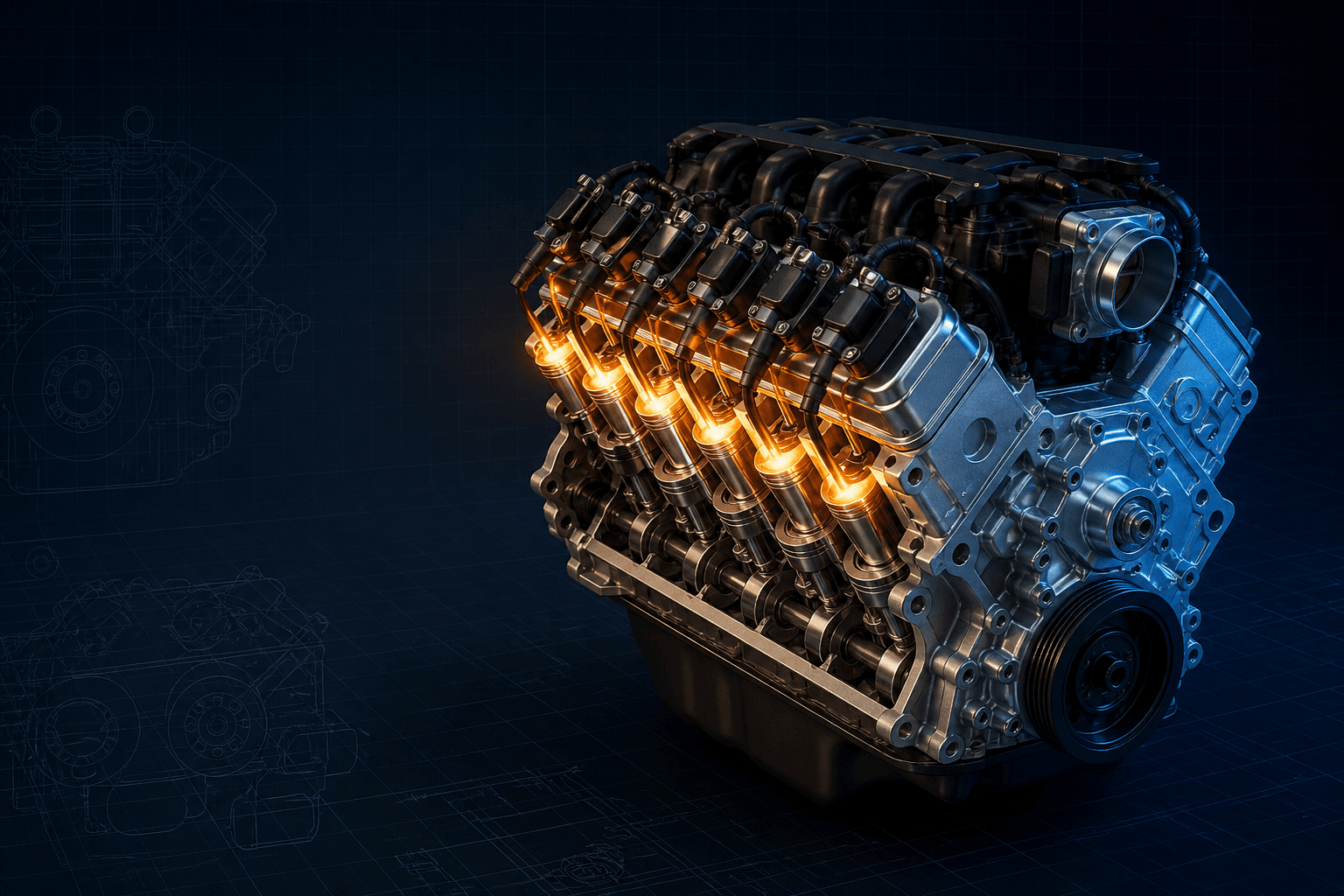
Interactive K20 COP circuit map
Branded downloads includedPNG and PDF exports carry the TorqueSheet logo, torquesheet.com, source-page URL, and republishing attribution request. The PDF source link is clickable.
This is a functional circuit and cylinder map. Open the exact Honda electrical diagram before assigning connector cavities, wire colors or ECU pins.
Honda K20 Coil Pack Wiring Diagram
| APPLICATION / ITEM | SPECIFICATION | NOTES |
|---|---|---|
| Cylinder order | 1-2-3-4 | Timing-chain end toward transmission |
| Firing order | 1-3-4-2 | Do not confuse with physical cylinder order |
| Ignition design | Four coil-on-plug units | No distributor or shared high-tension leads |
| Core circuit functions | Power + ground + ECU command | Terminal layout varies by coil and harness |
| Required identifier | Vehicle year/model + engine/ECU/harness | Especially important on swaps |
The 2002 Acura RSX owner manual directly documents four removable ignition coils over the plugs on an early K20 application. That confirms the COP architecture, but it is not a universal swap-harness pinout. Aftermarket K-series conversions often combine an engine harness, ECU and chassis from different donors, so all three identities matter.
How to use this specification correctly
- 01
Record the donor vehicle, model year, full engine code, ECU part/calibration, engine-harness part and coil part number.
- 02
Locate cylinder 1 at the timing-chain end, then label coils 1 through 4 toward the transmission before disconnecting anything.
- 03
Retrieve the Honda/Acura electrical troubleshooting manual or ServiceExpress diagram for the actual harness and ECU.
- 04
Compare connector face orientation, lock position, cavity count and terminal numbers; never mirror a view accidentally by looking from the wire side.
- 05
Verify ignition power at the shared feed under load and check grounds with a voltage-drop test. Use an oscilloscope or approved probe for command signals.
- 06
For a swap, continuity-map each cylinder command from ECU connector to coil with power removed before first start.
- 07
Clear codes and verify P0301-P0304 data under the conditions that produced the symptom; stop if the MIL flashes.
Cylinder numbering versus firing order
Viewed along the engine from the timing-chain end toward the transmission, the cylinders are numbered 1, 2, 3 and 4. The combustion sequence is 1-3-4-2. A harness branch laid physically in a row may appear to match 1-2-3-4, while ECU firing events follow the separate firing sequence.
Mark the chain end before removing a loose engine from a donor. Once the engine is on a stand or rotated in a swap bay, informal left/right descriptions cause avoidable errors.
What each coil circuit does
A COP module receives switched battery power and a cylinder-specific ignition command; depending on the coil design it also has one or more ground/reference or feedback-related terminals. The ECU derives timing from crankshaft and camshaft position signals and schedules dwell before commanding spark.
Do not assume every four-pin Honda-style coil uses the same cavity order. Connector shape, internal igniter arrangement and terminal assignment can change, and aftermarket coils sometimes copy the shell while changing electrical requirements.
K20 variant and swap boundaries
Early RSX, EP3 Civic Si, Accord/TSX K-series, later Civic Si and turbo K20C applications use different ECUs, emissions strategies, sensors and harness packaging. K20 and K24 parts are also frequently mixed in performance builds.
A conversion harness must match the ECU protocol, crank/cam trigger pattern, coils and chassis power distribution. A car that cranks with no spark may have correct coil power but incompatible trigger hardware or calibration; repinning by internet color chart can make the fault worse.
Safe electrical checks
- Check the ignition-coil fuse and relay identification for the exact chassis.
- Backprobe with the proper terminal adapter; avoid spreading sealed female terminals.
- Measure loaded voltage at the coil, not only open-circuit voltage with the connector unplugged.
- Use voltage drop to find weak engine and harness grounds.
- Do not use an incandescent test light on an ECU ignition-command circuit.
- Keep scope grounds short and connect only as the equipment/manual directs.
- Disable fuel or ignition using the approved procedure during cranking tests.
Misfire diagnosis before buying coils
A P0301-P0304 code identifies where combustion was irregular, not which component failed. A worn or wrong-gap plug, injector fault, intake leak, low compression, valve-clearance problem, wiring fault or mechanical timing error can mimic a bad coil.
Move one known component at a time and see whether the misfire follows. Honda's owner literature also warns against pulling on wires rather than the plastic connector and against contaminating the plug wells; terminal or boot damage introduced during testing can create a second fault.
Editorial verification status
TorqueSheet has verified the COP architecture against Honda's RSX documentation and provides Honda's official wiring-information path. This broad K20 page remains indexable but visibly limited until separate factory connector diagrams are attached for defined applications such as 2002-2004 RSX, 2004-2008 TSX and later K20C platforms.
Honda K20 Inline-Four specifications can change by model year, engine, platform, wheel, and installed component. Confirm the VIN or engine identity, part numbers, fastener condition, and the current manufacturer instructions before service.
Honda K20 Coil Pack Wiring Diagram and Cylinder Identification FAQs
Does the K20 firing order tell me which coil connector is which?+
No. The firing order is 1-3-4-2, but that is the ignition event sequence, not the physical coil or harness order. Cylinders run in physical order along the head, so a coil must be matched by its cylinder position and connector, never by counting the firing sequence.
Where is cylinder 1 on a K20?+
Cylinder 1 is at the timing-chain end; cylinders then run 2, 3 and 4 toward the transmission.
Does a K20 use a distributor?+
No. Factory K20 applications use four individual coil-on-plug units controlled electronically.
Are all K20 coil connectors pinned the same?+
Do not assume so. Match the coil, engine harness, ECU and year/model electrical diagram by connector view and terminal number.
Does P0302 mean coil 2 is bad?+
No. It means cylinder 2 misfired; test its plug, coil, injector, wiring, compression and related mechanical conditions.
Technical sources
TorqueSheet favors engine- and component-specific manufacturer instructions over unsourced universal values.
12002 Acura RSX Owner's Manual - ignition-coil serviceAmerican Honda's RSX manual shows four individual ignition coils, one over each spark plug, and gives model-specific plug information for the K20-powered RSX and Type-S.↗2Honda ServiceExpress publication matrixHonda identifies ServiceExpress as the source for service manuals, electronics manuals, diagnostic information, specifications and wiring diagrams selected by vehicle.↗3Honda ServiceExpress wiring-diagram guidanceHonda explains that wiring diagrams are accessed after selecting the model and year, supporting application-specific connector and circuit identification.↗