Honda Accord Lug Nut Torque Chart by Model Year
Honda Accord Lug Nut Torque Chart by Model Year. Verified 80 lbf-ft (108 N·m) factory-wheel value, star-pattern steps, dry-thread guidance, FAQs, and sources.
For the factory-wheel application covered here, use 80 lbf-ft (108 N·m). Tighten clean, dry fasteners in an opposite-side pattern and confirm the exact owner's manual when the wheel or hardware is not original.
For the factory-wheel application covered here, use 80 lbf-ft (108 N·m). Tighten clean, dry fasteners in an opposite-side pattern and confirm the exact owner's manual when the wheel or hardware is not original. That is the useful number, but it only produces a trustworthy installation when the wheel is fully seated and the friction conditions match the manual. Torque is a proxy for stud tension; rust, lubricant, damaged seats, or an impact gun can make the same wrench reading create a very different clamp load.
Honda's Accord procedure specifies 80 lbf-ft and calls for two or three trips through the illustrated sequence rather than one heavy pass. This page is deliberately scoped to the named application instead of blending several generations into one chart. Do not borrow the higher value published for certain performance-oriented Honda wheel packages. If the vehicle has conversion studs, spacers, locking hardware, or aftermarket wheels, identify those parts before choosing a setting.
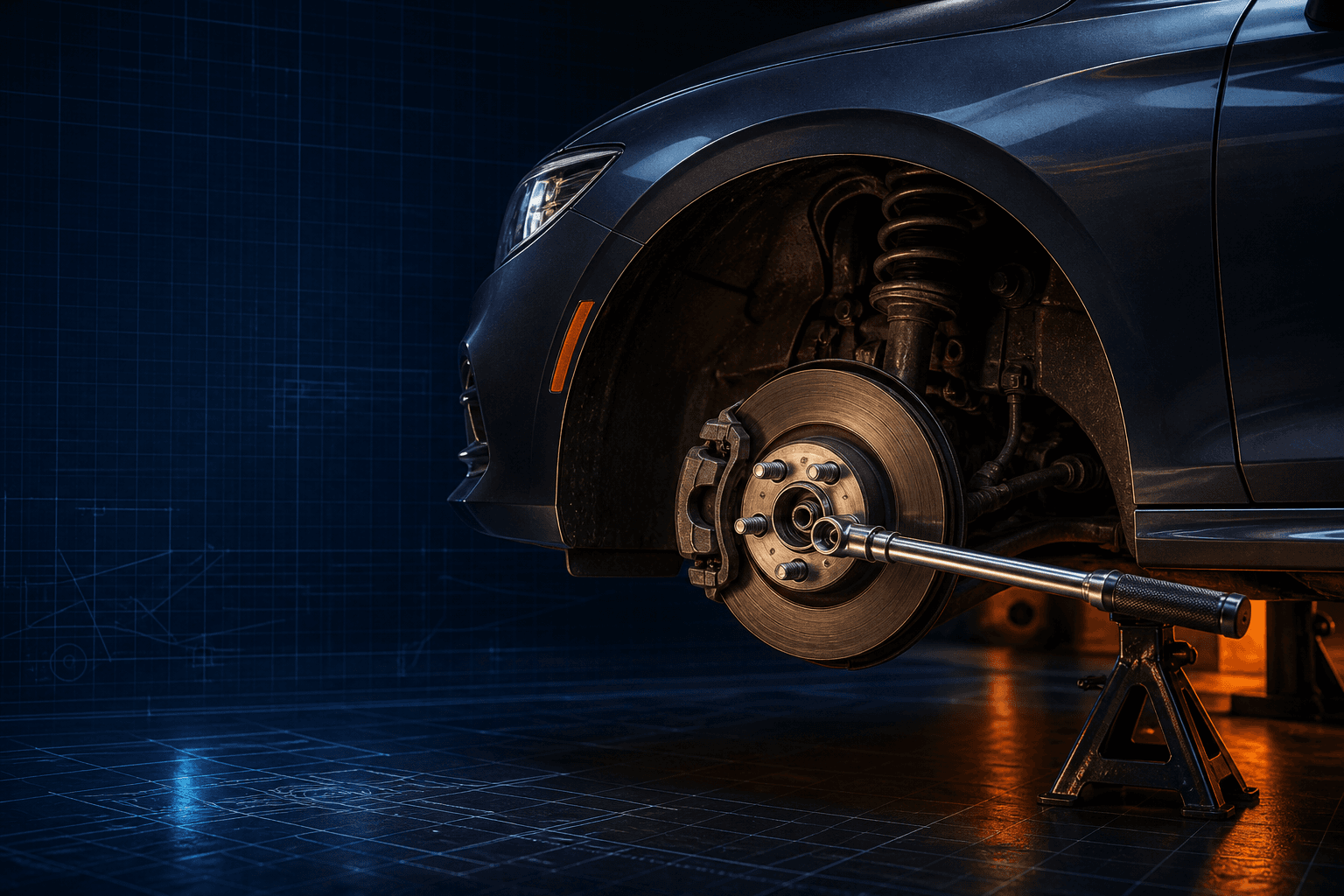
A careful wheel installation is repeatable: inspect, hand-start, snug across the wheel, apply the final setting smoothly, then make a confirmation pass. The diagram and checklist below turn the specification into a procedure a home mechanic or technician can actually audit.
Interactive Honda Accord lug-tightening diagram
STAR PATTERN
Branded downloads includedPNG and PDF exports carry the TorqueSheet logo, torquesheet.com, source-page URL, and republishing attribution request. The PDF source link is clickable.
Select each position to follow a five-lug star pattern. Six-lug wheels use the same opposite-side principle; follow the pattern in the exact owner manual.
Honda Accord Lug Nut Torque Spec
| APPLICATION / ITEM | SPECIFICATION | NOTES |
|---|---|---|
| Factory wheel torque | 80 lbf-ft | 108 N·m |
| Fastener condition | Clean and dry | No oil or anti-seize unless the exact manual directs it |
| Tightening method | Star / opposite-side | Hand-start, staged passes, calibrated torque wrench |
| Verification | Manual + hardware check | Aftermarket wheels and fasteners may specify a different value |
Honda's Accord procedure specifies 80 lbf-ft and calls for two or three trips through the illustrated sequence rather than one heavy pass. The value is a final hand-torque setting, not an impact-wrench target.
What matters specifically on the Accord
Honda's Accord procedure specifies 80 lbf-ft and calls for two or three trips through the illustrated sequence rather than one heavy pass. The table keeps the published imperial and metric values together so a unit conversion never becomes a shop-floor guess. Use a socket that fully engages the fastener and a torque wrench whose normal working range comfortably includes 80 lbf-ft.
Do not borrow the higher value published for certain performance-oriented Honda wheel packages. A wheel that rocks on corrosion, paint, or a mismatched seat can feel tight before it is clamped flat. Clean the hub pad and inspect every seat first; torque cannot correct a mechanical mismatch.
How to read the Accord torque table
Start with model year and platform rather than wheel diameter. Factory 17-, 18-, and 20-inch wheels can share a value when they use the same stud and seat design, while two trucks sold in the same calendar year can differ because one is an outgoing platform. Honda's Accord procedure specifies 80 lbf-ft and calls for two or three trips through the illustrated sequence rather than one heavy pass.
The figures in this guide assume original-equipment-style fasteners and clean, dry threads unless the cited manufacturer says otherwise. If an aftermarket wheel, spacer, conversion stud, locking nut, or repair kit supplies a different instruction, that component-specific document controls. Record the final value on the work order so the next technician does not have to infer it.
Common mistakes that produce an unsafe wheel installation
Do not borrow the higher value published for certain performance-oriented Honda wheel packages. Treat an unfamiliar nut seat, stud, spacer, or wheel as a reason to stop and identify the hardware before tightening.
- Using a value from a different generation, heavy-duty model, or aftermarket wheel.
- Applying oil or anti-seize to a specification written for dry threads.
- Cross-threading with an impact gun instead of starting every nut by hand.
- Tightening clockwise around the circle instead of using an opposite-side pattern.
- Letting the full vehicle weight trap a wheel that is not yet centered on the hub.
- Skipping the confirmation pass and the post-service recheck.
Honda Accord specifications can change by model year, engine, platform, wheel, and installed component. Confirm the VIN or engine identity, part numbers, fastener condition, and the current manufacturer instructions before service.
Procedures used with this specification
These steps are the same for every vehicle in this family, so they are documented once rather than repeated on each page. The values above remain specific to this Honda Accord.
Honda Accord Lug Nut Torque Chart by Model Year FAQs
What is the correct honda accord lug nut torque spec?+
80 lbf-ft (108 N·m) for the factory-wheel application described here. Confirm non-original wheels, fasteners, and trim-specific instructions separately.
Technical sources
TorqueSheet favors engine- and component-specific manufacturer instructions over unsourced universal values.
1Honda Accord wheel-nut procedureHonda's 80 lbf-ft specification and two-to-three-pass tightening procedure.↗