Dodge 5.7 HEMI Head Bolt Procedure by Engine Year
5.7L HEMI V8 head-bolt guide with staged values, sequence cautions, fastener identification, preparation, diagram, FAQs, and manufacturer sources.
There is no responsibly verified universal 5.7L HEMI cylinder-head torque stack. Match the year, VIN, engine sales code, castings, bolt families, and current Mopar service procedure before assembly.
There is no responsibly verified universal 5.7L HEMI cylinder-head torque stack. Match the year, VIN, engine sales code, castings, bolt families, and current Mopar service procedure before assembly. Cylinder-head torque is a controlled clamping procedure, not one final number. Bolt diameter, location, lubricant, gasket, head material, thread depth, and whether a fastener is torque-to-yield all change the result.
The 5.7L HEMI spans many vehicle years and revisions, while publicly repeated torque stacks often omit their original application and small-bolt instructions. Do not assemble the joint from an uncited chart or carry a 6.1L, 6.2L, or 6.4L HEMI sequence onto a 5.7L. Identify the engine code and compare every bolt with the service illustration before cleaning threads or opening a replacement set.
Work on a cold, clean assembly. Chase only when the service method allows it, clear liquid from blind holes, verify dowels and gasket orientation, lower the head without sliding, hand-start every fastener, and mark each completed stage.
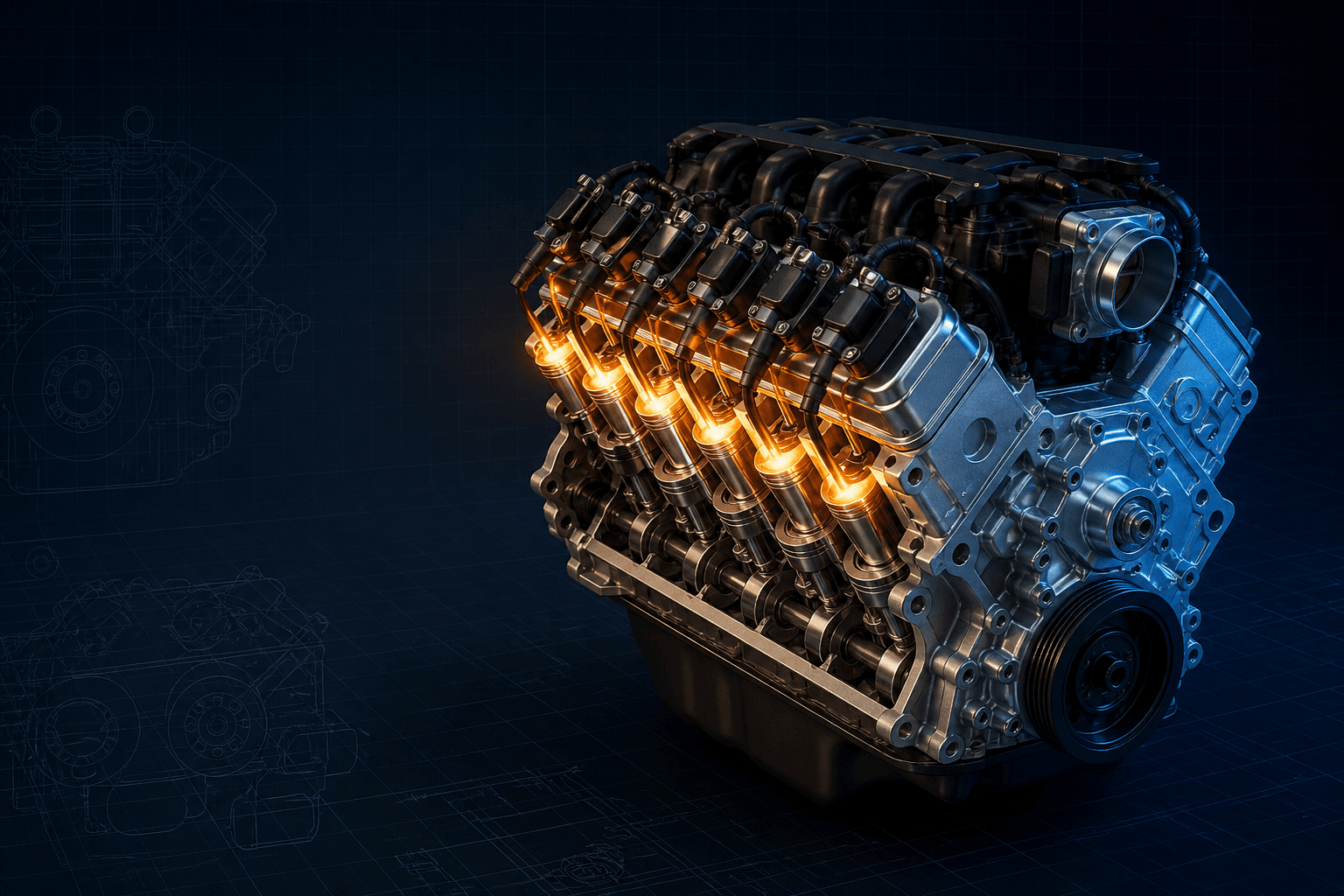
Interactive 5.7L HEMI V8 cylinder-head sequence
Branded downloads includedPNG and PDF exports carry the TorqueSheet logo, torquesheet.com, source-page URL, and republishing attribution request. The PDF source link is clickable.
Use the numbered pattern only with the exact engine service procedure; stages, bolt families, lubricant, and replacement requirements are part of the specification.
Dodge 5.7 Hemi Cylinder Head Torque Specs
| APPLICATION / ITEM | SPECIFICATION | NOTES |
|---|---|---|
| Model year and VIN | Required | Select exact Mopar procedure |
| Engine and casting | Confirm | MDS and revision can matter |
| Main and small bolts | Separate families | Do not combine stages |
| Final authority | Mopar/TechAuthority | Use current application data |
Main bolts and smaller perimeter fasteners require distinct documented stages; friction condition, bolt reuse, and service-manual revision are part of the specification.
How to use this specification correctly
- 01
Identify engine code, model year, cylinder head, gasket, and new-bolt requirements from official service information.
- 02
Check block and head flatness using the specified straightedge and feeler-gauge method; repair out-of-limit parts before assembly.
- 03
Clean mating surfaces without scratching aluminum or leaving abrasive residue. Clear blind bolt holes and inspect threads.
- 04
Install new gasket and locating dowels in the required orientation, then lower the head squarely onto the block.
- 05
Prepare each bolt exactly as specified—new or reusable, dry or lubricated, and with the correct washer orientation.
- 06
Hand-start every bolt and perform each torque/angle stage in the numbered sequence. Mark bolt heads after every angle pass.
- 07
Complete small outer fasteners or follow-up stages only where the exact service procedure places them.
- 08
Reassemble timing, valvetrain, cooling, intake, and exhaust systems; prime lubrication where required, then inspect for leaks and abnormal operation.
Why the former 25-40-plus-90 summary was removed
The previous template repeated a commonly circulated main-bolt sequence without tying it to a model year, engine revision, head casting, bolt set, or Mopar service document. That is not sufficient evidence for a cylinder-head joint, so those numbers have been removed from the quick-answer table.
A 5.7L HEMI lookup must begin with the vehicle year, VIN, engine sales code, block and head casting, MDS configuration, and the service-information revision. Main fasteners and smaller perimeter bolts can use different stages, and a sequence copied from another HEMI family can create uneven gasket load.
How to obtain and audit the controlling Mopar procedure
Use Mopar's vehicle-information and TechAuthority service resources for the exact application. Before assembly, transcribe every bolt family, position, torque, angle, lubricant condition, reuse rule, and sequence into a stage sheet; compare it with the new gasket and fastener manufacturer's instructions and resolve conflicts before installing the head.
Do not substitute an online diagram that omits bolt lengths or the small-bolt stage. If the official document is unavailable, pause the repair. The safe answer is to obtain the correct procedure, not to promote a familiar number into a universal specification.
Why a generic final torque is unsafe
The 5.7L HEMI spans many vehicle years and revisions, while publicly repeated torque stacks often omit their original application and small-bolt instructions. A torque-angle procedure deliberately stretches the main bolts after an initial seating torque. Reusing a torque-to-yield bolt or lubricating a dry specification changes clamp load even if the wrench displays the printed number.
Do not assemble the joint from an uncited chart or carry a 6.1L, 6.2L, or 6.4L HEMI sequence onto a 5.7L. The downloadable diagram is a workflow aid, not a substitute for the engine-specific service page.
Build a written procedure before opening the engine
Print the engine-specific service pages and make a stage sheet with one row for every bolt family. Record torque units, angle, sequence number, lubricant condition, bolt length, reuse rule, and any waiting or loosening step. Keep the sheet beside the engine and initial each completed pass. This sounds formal, but it prevents the most common assembly error: blending a remembered stage from one engine with the sequence from another.
Compare the replacement gasket and bolt set with the removed parts before the old components are discarded. Confirm bore openings, coolant and oil passages, locating holes, washer faces, thread lengths, and the number of small outer fasteners. Photograph the original arrangement and store bolts in a numbered template if they are being measured or used only for diagnosis.
Surface, thread, and gasket preparation
Head-gasket sealing depends on flatness, surface finish, cleanliness, and correct dowel location. Remove residue with methods approved for the block and head material; abrasive discs can remove metal and leave particles in the engine.
Liquid trapped in a blind bolt hole can hydraulically crack the block or create a false torque reading. Clean and dry holes, inspect for pulled threads, and confirm bolt length by position.
Torque, angle, and sequence control
Use a recently calibrated torque wrench for torque stages and a stable angle gauge for rotation stages. Draw the sequence on a card, mark each bolt after each stage, and stop if a bolt feels inconsistent or reaches angle with unusually low resistance.
The center-out pattern spreads gasket load and reduces head distortion. Never jump ahead to make up a forgotten bolt; determine the correct recovery method from the service information.
Interpreting an abnormal bolt feel
Every main bolt in the same stage should feel broadly consistent. A bolt that becomes tight too early may be bottoming in a contaminated hole, using the wrong length, cross-threaded, or dragging on a damaged washer. A bolt that turns too easily may be stretching abnormally or pulling threads. Stop before the angle is completed and investigate; finishing the pass to keep the sequence tidy can turn a recoverable problem into a damaged block.
If a stage was applied with the wrong unit, lubricant, bolt, or sequence, do not improvise a correction by adding or subtracting torque. Document what happened and consult the gasket, fastener, and engine service instructions for a restart or replacement decision.
When the engine should not be assembled
A pause at this stage is cheaper than repeating the entire job after coolant intrusion, combustion leakage, or a stripped block thread.
- Head or block flatness outside the published limit.
- Cracked casting, damaged fire-ring area, or incorrect surface finish.
- Pulled, dirty, wet, or repaired threads without an approved repair procedure.
- Mixed bolt lengths, unknown used torque-to-yield bolts, or damaged washers.
- Wrong gasket bore, thickness, orientation, or coolant/oil passage layout.
- Unavailable calibrated torque and angle tools.
First start and post-repair checks
Before starting, restore fluids, prime lubrication where required, rotate the engine by hand through the specified checks, and verify timing references. On first start, watch oil pressure, coolant temperature, misfire data, and external leakage.
Do not retorque modern torque-to-yield head bolts unless the exact procedure explicitly calls for it. A later leak is a diagnostic problem, not permission to add angle.
Dodge 5.7L HEMI V8 specifications can change by model year, engine, platform, wheel, and installed component. Confirm the VIN or engine identity, part numbers, fastener condition, and the current manufacturer instructions before service.
Dodge 5.7 HEMI Head Bolt Procedure by Engine Year FAQs
Is there one cylinder-head torque sequence for every 5.7 HEMI?+
No. Model year, engine revision, casting, bolt family, lubricant condition, and service-document revision must match before numerical stages are used.
Why are the old 25 ft-lb, 40 ft-lb, and 90-degree figures not shown as the answer?+
They were not tied to an exact public Mopar application source. Publishing them as universal factory data would create a realistic assembly risk.
Where should the correct HEMI procedure come from?+
Use the VIN- and year-matched Mopar/TechAuthority service information together with the instructions supplied for the exact gasket and fastener set.
Can the small cylinder-head bolts use the main-bolt procedure?+
No. Treat each fastener family separately and follow its documented value and position in the exact service sequence.
Technical sources
TorqueSheet favors engine- and component-specific manufacturer instructions over unsourced universal values.
1Mopar vehicle information libraryPrimary Ram, Dodge, and Jeep owner-manual lookup.↗2Fel-Pro fastener torque and sequence guidanceGeneral tightening guidance; exact engine service information remains controlling.↗