Dodge 4.7L V8 Head Bolt Torque Sequence by Revision
Dodge 4.7L head-bolt guide comparing early 15/35 lb-ft +90° and later 20 lb-ft +90° +90° methods, small sealed bolts and reuse inspection.
Dodge/Chrysler 4.7L head-bolt procedures changed. A cited 2005 Ram and 2008 Aspen use ten main bolts at 20 N·m (15 lb-ft), then 47 N·m (35 lb-ft), then +90°; their four smaller bolts are tightened to 25 N·m (18 lb-ft) during stage 2 and 30 N·m (22 lb-ft) after the angle pass. A cited 2009 Grand Cherokee uses 27 N·m (20 lb-ft) on main bolts 1–10, repeats that torque without loosening, tightens small bolts 11–14 to 14 N·m (124 lb-in), then adds +90° and another +90° to bolts 1–10 and finishes 11–14 at 26 N·m (19 lb-ft). Select by VIN-specific service information, not a generic 4.7L label.
The Chrysler PowerTech 4.7L remained in production long enough to receive a revised cylinder-head tightening method. Treating every Dakota, Durango, Ram, Grand Cherokee and Aspen as identical can either omit an entire 90-degree pass or apply one where the earlier manual did not call for it.
The older example uses two torque stages and one angle stage on the ten main bolts. The later example seats all ten at 20 lb-ft twice, then uses two 90-degree turns. Both procedures separately control four smaller bolts at the upper edge of the head, and those bolts require thread sealant. Leaving them dry can create a leak even when the main-bolt clamp is correct.
This page remains indexable but visibly limited until licensed early and late physical number maps are available. Its interactive controller deliberately records stages without inventing fastener locations. Keep the matching left- or right-head service illustration in view, especially because mirroring a pattern from the opposite bank can change the order.
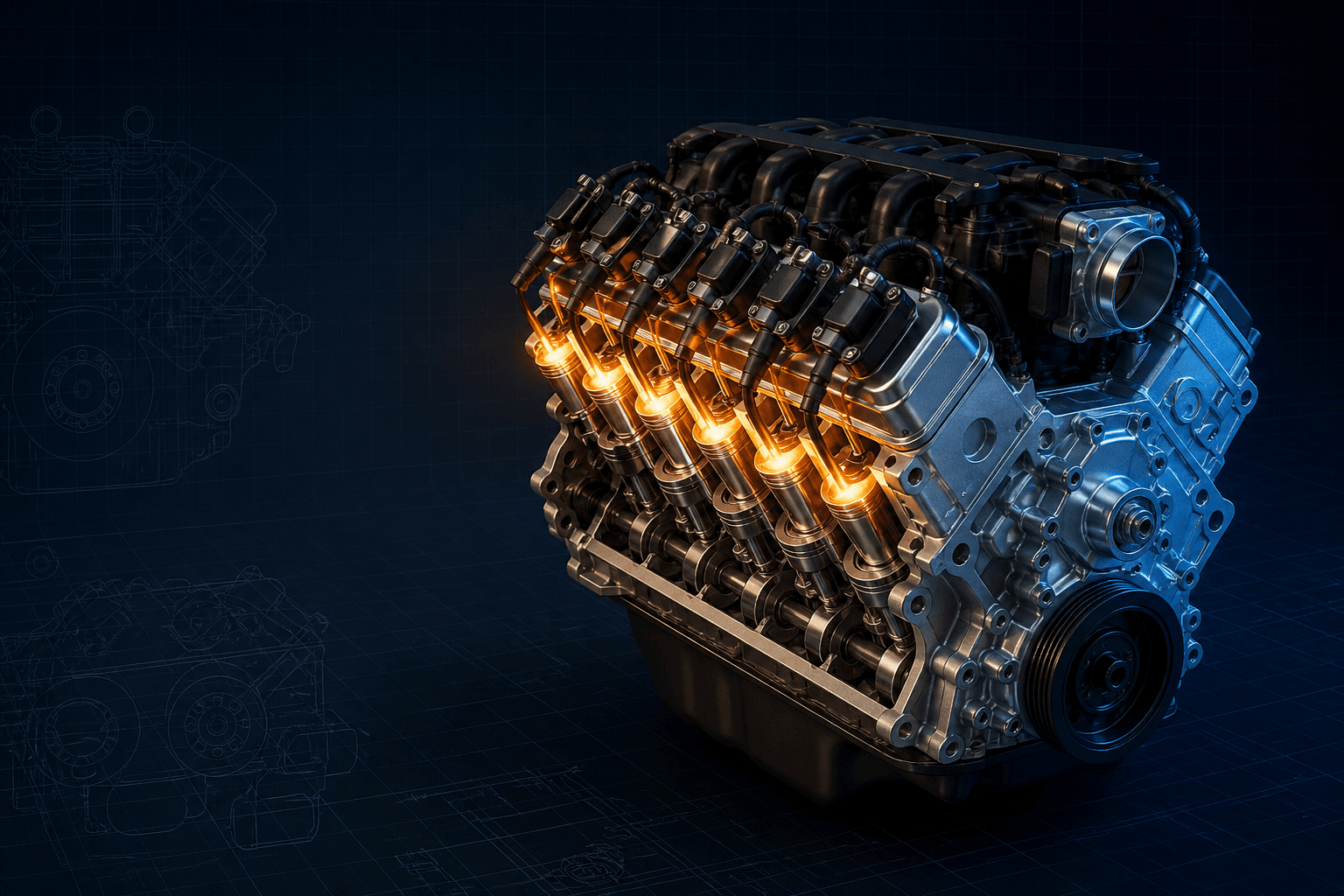
Interactive 4.7L 14-fastener revision controller
Branded downloads includedPNG and PDF exports carry the TorqueSheet logo, torquesheet.com, source-page URL, and republishing attribution request. The PDF source link is clickable.
Tracks stage completion for ten main and four smaller bolts. It is not a scaled left/right location drawing; use the VIN-specific Chrysler service figure to map every number.
Dodge 4.7 V8 Head Bolt Torque Sequence Diagram
| APPLICATION / ITEM | SPECIFICATION | NOTES |
|---|---|---|
| 2005 Ram / 2008 Aspen main bolts | 15 lb-ft → 35 lb-ft → +90° | Bolts 1–10 in sequence |
| Earlier small bolts 11–14 | 18 lb-ft → 22 lb-ft | Specified Mopar sealant required |
| 2009 Grand Cherokee main seating | 20 lb-ft, verify 20 lb-ft | Repeat without loosening |
| 2009 main angle stages | +90° → +90° | Bolts 1–10 in sequence |
| 2009 small bolts 11–14 | 124 lb-in → 19 lb-ft | Seal threads as specified |
The ten main-bolt threads receive clean engine oil; the four smaller M8 bolts require the specified Mopar locking/sealing compound because their holes can leak. Factory procedures allow main-bolt reuse only after a straightedge confirms every thread crest remains in contact—any necked section requires replacement. Unknown-history hardware is safer replaced as a matched set.
How to use this specification correctly
- 01
Decode the VIN and record vehicle, year, engine/build code and cylinder-head part numbers. Retrieve that exact Chrysler/Dodge/Jeep service procedure; do not assign the later method from calendar year alone.
- 02
Before chain removal, place the crank and cams in the service position and secure the timing system as directed. The chain tensioner arms and guides can be damaged while lowering a head if they are not controlled.
- 03
Remove the head only when cool. Loosen bolts in the published reverse order, keep components by bank and discard the old gasket. Protect open oil, coolant and timing cavities.
- 04
Clean the aluminum head and iron block with a wood/plastic scraper and approved solvent. Measure flatness in several directions; the cited manuals give a 0.0508 mm (0.002 in) head warpage limit.
- 05
Inspect all fourteen fasteners and holes. Hold a precision straightedge along each main bolt's threads; replace any bolt if all thread crests do not contact because that indicates necking.
- 06
Apply clean engine oil consistently to the ten main-bolt threads. Coat the four smaller M8 threads with the exact current Mopar Lock and Seal/Thread Sealant with PTFE equivalent identified for the application.
- 07
Install the correct new gasket on sound dowels and lower the head without striking a tensioner or guide. Hand-start ten main bolts and four smaller bolts in their correct positions.
- 08
For the cited early branch, tighten main bolts 1–10 to 20 N·m, then 47 N·m; at that stage tighten 11–14 to 25 N·m. Add 90 degrees to 1–10, then finish 11–14 at 30 N·m.
- 09
For the cited later branch, tighten 1–10 to 27 N·m and repeat that check without loosening; tighten 11–14 to 14 N·m. Add 90 degrees to 1–10 twice in separate full sequence passes, then finish 11–14 at 26 N·m.
- 10
Reassemble chains, guides, tensioners and cam sprockets by the exact valve-timing procedure, hand-rotate and recheck marks. Restore fluids, prime lubrication as needed, pressure-test and inspect for coolant, combustion and sealed-bolt leakage.
Early and later procedures cannot be blended
The 2005 Ram and 2008 Aspen sources publish 20 N·m, 47 N·m and one 90-degree turn. The 2009 Grand Cherokee source publishes 27 N·m twice followed by two 90-degree turns. These are complete engineered sequences, not interchangeable menu options.
Some archived manuals also label the ten main fasteners M10 in one application and M11 in another. Order parts from VIN and actual fastener measurements; the bolt-position numbers and complete application procedure matter more than copying an isolated diameter label.
Four small bolts need sealing as well as torque
Bolts 11–14 do not follow the main-bolt angle turns. They have lower staged torque values and the factory procedure explicitly requires locking/sealing compound on their threads.
Clean old compound from the holes without cutting threads oversize. Apply the specified product uniformly; excess sealant can contaminate passages, while missing sealant can allow external or internal leakage.
Understanding Chrysler's bolt-reuse test
These manuals do not describe the older bolts simply as one-use TTY hardware. They require inspection before reuse: lay a straightedge along the threaded portion and confirm every thread contacts it. A narrowed section reveals permanent stretch and the bolt must be discarded.
Reuse remains a judgment about known, undamaged original hardware. Corrosion, damaged bearing faces, mixed sets or unknown prior torque justify new matched fasteners even when a quick straightedge check appears acceptable.
Timing-system and overheating considerations
The 4.7L has chain-driven overhead cams and aluminum heads. A prior overheat can affect flatness, valve seats, guides and tensioner components, so replacing only the gasket without inspection may repeat the failure.
Keep cam followers and bearing caps in original locations, protect guide arms during head placement and use the dedicated timing verification after the head is clamped. Free hand rotation is necessary but does not replace mark verification.
4.7L head-installation checklist
- VIN, vehicle, year and engine build recorded
- Exact early/later service branch confirmed
- 3.7L and 5.7L procedures excluded
- Head removed cold in reverse sequence
- Head/block surfaces cleaned without metal abrasives
- Flatness checked against 0.002-inch application limit
- Main bolts passed straightedge thread inspection or were replaced
- Ten main threads uniformly oiled
- Four M8 threads coated with specified sealant
- Correct gasket and dowels installed
- Bank-specific number map visible
- All torque and angle stages logged
- Early and later stages not mixed
- Timing chains/guides/tensioners verified
- Cooling and sealing checks completed
Dodge 4.7L PowerTech SOHC V8 specifications can change by model year, engine, platform, wheel, and installed component. Confirm the VIN or engine identity, part numbers, fastener condition, and the current manufacturer instructions before service.
Dodge 4.7L V8 Head Bolt Torque Sequence by Revision FAQs
What are the early Dodge 4.7L head-bolt stages?+
For the cited 2005 Ram/2008 Aspen method, main bolts 1–10 are tightened to 15 lb-ft, 35 lb-ft and then an additional 90 degrees.
What changed in the later 4.7L procedure?+
The cited 2009 Grand Cherokee seats main bolts at 20 lb-ft twice without loosening, then adds 90 degrees twice in separate passes.
What torque do the four small 4.7L head bolts use?+
Earlier cited applications use 18 then 22 lb-ft. The 2009 example uses 124 lb-in initially and 19 lb-ft finally. Verify the exact vehicle manual.
Do small Dodge 4.7L head bolts require sealant?+
Yes. The four M8 bolts require the specified Mopar locking/thread sealant; failure to seal them can cause leaks.
Can Dodge 4.7L head bolts be reused?+
Factory information permits reuse only after inspection. Hold a straightedge against the threads and replace any bolt whose thread crests do not all contact it, as well as damaged or uncertain hardware.
Is every 2008 4.7L already on the later double-angle method?+
No. The cited 2008 Aspen manual still uses the earlier single-angle method, so selection must be made from vehicle- and VIN-specific information.
Can aftermarket studs use these factory stages?+
No. Use the exact stud kit's lubricant, washer and torque instructions along with the head/gasket requirements.
Technical sources
TorqueSheet favors engine- and component-specific manufacturer instructions over unsourced universal values.
1Mopar vehicle informationOfficial Dodge, Ram, Chrysler and Jeep model-year information lookup.↗