Toyota 3.4L 5VZ-FE Timing Belt Alignment: Crank and Cam Marks
Toyota 5VZ-FE 3.4 V6 timing-belt alignment guide showing crank-to-oil-pump mark, RH cam knock-pin reference, LH cam mark, belt routing and verification.
At No. 1 cylinder TDC/compression on the Toyota 5VZ-FE, align the crankshaft timing-pulley mark with the mark on the oil-pump body. Align the right-hand camshaft knock-pin hole with the timing mark on the No. 3 timing-belt cover, and align the left-hand camshaft-pulley timing mark with its mark on the No. 3 cover. Install the belt with the pulley surfaces clean and dry, preserve tension on the specified spans, then release the hydraulic tensioner and hand-rotate the crank to recheck all three metal-to-cover references.
The 5VZ-FE has two overhead camshafts connected to the crank by one toothed belt. Its marks are easy to misread because the right cam reference is described by Toyota as the camshaft knock-pin hole, while the left side uses a visible pulley mark. Generic diagrams that draw identical dots on both cam gears hide that distinction.
Toyota's repair sequence first proves No. 1 TDC using the crank pulley and cover, then establishes the cam positions against the No. 3 rear timing cover. During direct belt installation with the lower cover removed, the crank timing pulley is checked against the oil-pump-body mark. Both views describe the same mechanical position through different visible references.
This page focuses on alignment rather than promising one replacement interval or bolt torque for every Tacoma, T100, 4Runner and Tundra. It remains indexable but visibly limited until separate model/year Toyota TIS illustrations are licensed into the downloadable diagram.
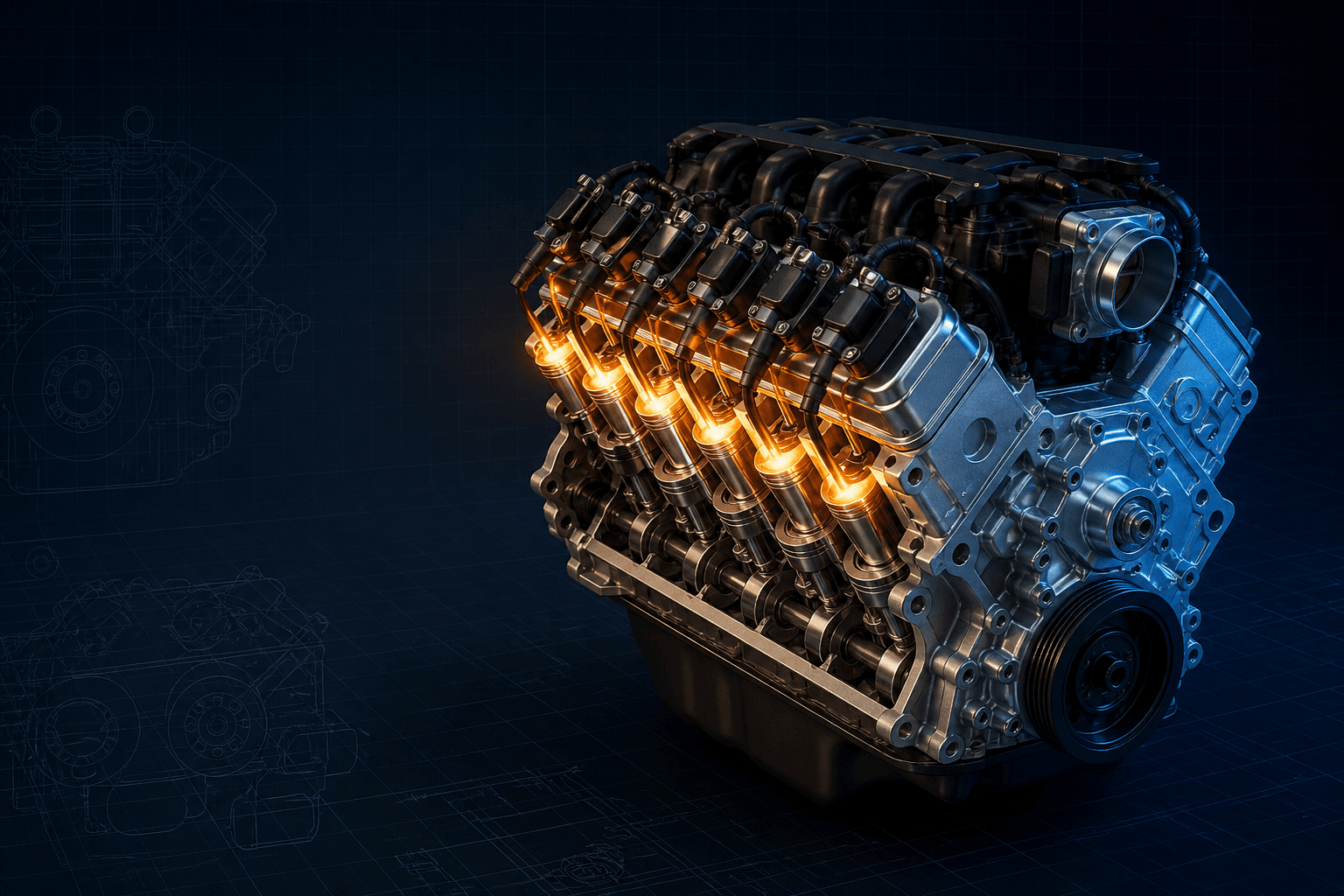
Interactive 5VZ-FE timing-belt map
Branded downloads includedPNG and PDF exports carry the TorqueSheet logo, torquesheet.com, source-page URL, and republishing attribution request. The PDF source link is clickable.
Vehicle-orientation map of the crank, RH cam and LH cam references. Use the exact Toyota illustration to identify each rear-cover pointer.
Toyota 3.4 V6 Timing Belt Alignment Diagram
| APPLICATION / ITEM | SPECIFICATION | NOTES |
|---|---|---|
| Crank reference | Timing-pulley mark to oil-pump-body mark | No. 1 TDC/compression setup |
| RH cam reference | Cam knock-pin hole to No. 3 cover mark | Vehicle right-hand bank |
| LH cam reference | Cam-pulley mark to No. 3 cover mark | Vehicle left-hand bank |
| Belt condition | Clean and dry; no oil, water or solvent | Do not twist or turn belt inside out |
| Final proof | Hand rotation and fixed-mark recheck | Do not expect printed belt lines to realign immediately |
The printed installation lines on a new belt help initial placement but are not the final proof of timing; after rotation they will not immediately return to the pulley marks. Toyota's procedure uses fixed marks on the engine and pulleys. Left and right are vehicle orientation, and a front-facing diagram appears reversed to a technician standing at the radiator.
How to use this specification correctly
- 01
Confirm engine code 5VZ-FE, vehicle year and applicable Toyota TIS procedure. Record any existing belt direction and matchmarks only if the belt will be reused under the manual's conditions.
- 02
Disconnect the battery and remove accessories, fan, drive belts, crank pulley and covers by the vehicle procedure. Do not use cam or crank timing bolts as counterholds unless Toyota specifies the SST method.
- 03
Set No. 1 cylinder to TDC/compression. With covers installed, align the crank pulley groove to 0 and confirm both cam references align; rotate the crank 360 degrees if cams are on the opposite stroke.
- 04
With the belt exposed, align the crankshaft timing-pulley mark to the oil-pump-body mark.
- 05
Align the RH camshaft knock-pin hole to the RH timing mark on the No. 3 cover. Align the LH cam-pulley timing mark to the LH cover mark.
- 06
Inspect belt teeth/backing, idlers, tensioner, water pump, seals and pulley flanges. Correct every oil/coolant leak before installing a clean belt.
- 07
Install the belt in the order prescribed by the Toyota procedure, matching printed installation lines where supplied and maintaining tension between the crank and cam pulleys on the designated non-tensioned spans.
- 08
Install the compressed/pinned hydraulic tensioner using the exact slow-compression and orientation procedure; verify all fixed marks again before pulling the retaining pin.
- 09
Rotate the crankshaft clockwise by hand through two complete revolutions. Stop immediately on abnormal resistance; do not use the starter as a timing test.
- 10
Return to No. 1 TDC and recheck crank, RH cam and LH cam fixed marks. Reassemble covers/guide/pulley with the application torque procedures and check for leaks or abnormal belt tracking after startup.
Crankshaft alignment references
With the outer pulley and No. 1 cover installed, Toyota uses the pulley groove aligned to the 0 mark. With the lower belt hardware exposed, the crankshaft timing-pulley mark aligns to the oil-pump-body mark. These are two visual references for the same crank position.
If they disagree, stop and inspect the pulley, key, timing gear and cover. Do not move a cam mark to compensate for a damaged crank keyway or slipped/mismatched outer pulley.
Right and left cam marks are not described identically
For the RH side, Toyota directs alignment of the camshaft knock-pin hole with the No. 3 timing-cover mark. For the LH side, Toyota directs alignment of the timing mark on the camshaft pulley with the cover mark.
Always use vehicle LH/RH. Standing in front of the vehicle reverses what the technician sees on the page, which is why mirrored online graphics often cause a one-bank error.
Belt-line marks versus engine marks
A replacement belt may have three printed installation references. They are useful only when the belt direction and specific product instructions match the engine. The permanent mechanical proof remains pulley-to-engine-cover alignment.
After two crank turns, the shafts return to their timing relationship but the belt has advanced a different number of teeth; printed lines normally will not sit on all pulley marks. Do not remove and reinstall a correct belt solely for that reason.
Tensioner and contamination cautions
Toyota warns not to bend, twist or turn the belt inside out and not to contaminate it with oil, water or steam. Wipe pulley surfaces only as directed; aggressive cleaner can damage belt material or sealed bearings.
Hydraulic tensioners are compressed slowly and retained in the specified orientation. A rushed vise operation can damage the seal or valve. Replace leaking, rough or questionable idlers and correct water-pump/seal leaks while access is available.
Final verification checklist
- Engine code and exact year manual confirmed
- Crank mark aligned to oil-pump-body reference
- RH knock-pin hole aligned to rear-cover mark
- LH cam-pulley mark aligned to rear-cover mark
- Belt direction and printed lines used only as product instructions specify
- Pulley surfaces clean and dry
- Idlers, tensioner and water pump inspected
- Tensioner released only after triple-mark check
- Two clockwise hand revolutions completed without interference
- All fixed marks rechecked at No. 1 TDC
Toyota 3.4L 5VZ-FE V6 specifications can change by model year, engine, platform, wheel, and installed component. Confirm the VIN or engine identity, part numbers, fastener condition, and the current manufacturer instructions before service.
Toyota 3.4L 5VZ-FE Timing Belt Alignment: Crank and Cam Marks FAQs
Where is the Toyota 5VZ-FE crank timing mark?+
The crankshaft timing-pulley mark aligns with the mark on the oil-pump body. With outer covers installed, the crank pulley groove aligns with 0 on the No. 1 cover.
How do the 5VZ-FE cam marks align?+
The RH cam knock-pin hole aligns to its No. 3 cover mark, and the LH cam-pulley timing mark aligns to its No. 3 cover mark.
Why do the belt's printed lines not line up after two turns?+
They are installation aids and advance around the system. Recheck the permanent pulley-to-engine marks instead.
Can I turn a cam independently with the belt removed?+
Only as the Toyota procedure specifies and with the crank positioned safely. Do not force a cam against valve spring or piston contact.
Should I clean the belt pulleys with solvent?+
Toyota's procedure says to keep them free of oil and water and only wipe them; do not apply an unspecified cleansing agent.
Which side is RH on the 5VZ-FE diagram?+
Right-hand is the vehicle's right side viewed from the driver's seat, not the technician's right while facing the engine.
Technical sources
TorqueSheet favors engine- and component-specific manufacturer instructions over unsourced universal values.
1Toyota Technical Information SystemToyota identifies TIS repair manuals and technical information as the factory service source for North American vehicles.↗2Toyota 2003 Tundra 5VZ-FE repair-manual timing-belt sectionThe reproduced Toyota RM956U procedure identifies the crank, RH cam and LH cam alignment references and the belt installation sequence.↗