2005 Chevy 5.3 Harmonic Balancer Bolt Torque Procedure
2005 Chevy 5.3 Harmonic Balancer Bolt Torque Procedure with fastener-group distinctions, installation cautions, application limits and official source lookup.
On the covered 2005 Silverado 1500 5.3L, use the old crank bolt only to seat the balancer at 240 lb-ft (330 N·m), then remove it. Install a new final bolt, tighten it to 37 lb-ft (50 N·m), and turn it an additional 140 degrees.
On the covered 2005 Silverado 1500 5.3L, use the old crank bolt only to seat the balancer at 240 lb-ft (330 N·m), then remove it. Install a new final bolt, tighten it to 37 lb-ft (50 N·m), and turn it an additional 140 degrees.
This two-bolt procedure applies to the documented Gen III 5.3L production damper and crankshaft. Gen V engines, aftermarket dampers, supercharger hubs, ARP bolts and altered crank noses use the component maker's procedure.
First install the balancer with the approved installer, then use the old bolt for the seating operation. After the 240-lb-ft step, verify that the crank nose sits 0.094–0.176 in (2.4–4.48 mm) inside the balancer bore, discard the old bolt and complete the final clamp with a new bolt; 240 lb-ft is not the final new-bolt torque.
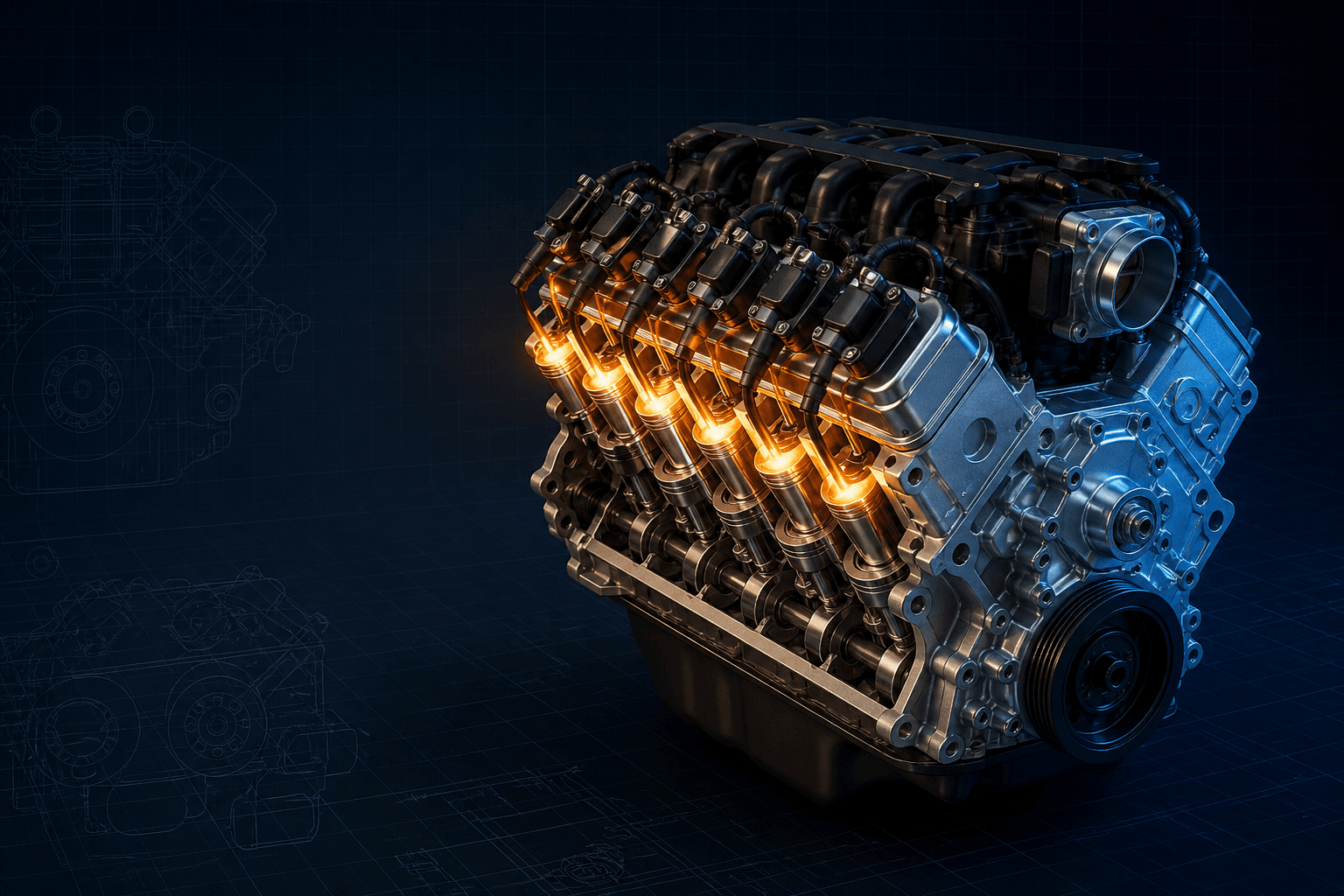
Interactive 2005 Silverado 1500 5.3L Gen III V8 fastener map
Branded downloads includedPNG and PDF exports carry the TorqueSheet logo, torquesheet.com, source-page URL, and republishing attribution request. The PDF source link is clickable.
Orientation aid only. Match every position and stage to the exact service diagram.
Chevy 5.3 Harmonic Balancer Torque Spec
| APPLICATION / ITEM | SPECIFICATION | NOTES |
|---|---|---|
| Used bolt — seating only | 240 lb-ft | 330 N·m; remove after seating |
| Required seating depth | 0.094–0.176 in | 2.4–4.48 mm crank recess |
| New final bolt — initial | 37 lb-ft | 50 N·m |
| New final bolt — angle | +140° | Use an angle gauge |
First install the balancer with the approved installer, then use the old bolt for the seating operation. After the 240-lb-ft step, verify that the crank nose sits 0.094–0.176 in (2.4–4.48 mm) inside the balancer bore, discard the old bolt and complete the final clamp with a new bolt; 240 lb-ft is not the final new-bolt torque.
How to use this specification correctly
- 01
Identify the exact engine, component, fastener size and hardware instructions.
- 02
Clean and inspect threads and mating faces; apply only the specified lubricant or sealant.
- 03
Tighten in gradual balanced passes and verify any angle, cure-time or recheck instruction.
The old and new bolts have different jobs
The used bolt is a temporary seating tool. After the installer places the balancer on the crank, tighten that used bolt to 240 lb-ft, remove it and check the recess measurement. It does not remain in the engine.
Final retention requires a new bolt at 37 lb-ft plus 140 degrees. Presenting only the 240-lb-ft number can leave a fatigued bolt installed or lead someone to apply the seating load to the new torque-to-yield fastener incorrectly.
Check seating before the angle turn
The crank nose should sit 0.094–0.176 inch inside the balancer bore after seating. If it does not, stop and inspect the hub bore, crank snout, installation-tool setup and alignment rather than relying on the new bolt to finish pulling the hub into place.
Use a proper angle gauge for the 140-degree turn and hold the crankshaft with the approved method. An aftermarket damper or reusable performance bolt is a different engineered joint and follows its maker's lubricant, washer and torque instructions.
Application boundaries for 2005 Silverado 1500 5.3L Gen III V8
This two-bolt procedure applies to the documented Gen III 5.3L production damper and crankshaft. Gen V engines, aftermarket dampers, supercharger hubs, ARP bolts and altered crank noses use the component maker's procedure.
First install the balancer with the approved installer, then use the old bolt for the seating operation. After the 240-lb-ft step, verify that the crank nose sits 0.094–0.176 in (2.4–4.48 mm) inside the balancer bore, discard the old bolt and complete the final clamp with a new bolt; 240 lb-ft is not the final new-bolt torque.
Chevrolet 2005 Silverado 1500 5.3L Gen III V8 specifications can change by model year, engine, platform, wheel, and installed component. Confirm the VIN or engine identity, part numbers, fastener condition, and the current manufacturer instructions before service.
2005 Chevy 5.3 Harmonic Balancer Bolt Torque Procedure FAQs
What is the final Chevy 5.3 harmonic-balancer bolt torque?+
For the covered 2005 Gen III engine, install a new bolt at 37 lb-ft and then turn it another 140 degrees.
Why does the procedure also list 240 lb-ft?+
That value is only for seating the balancer with the old bolt, which is removed before the new final bolt is installed.
How far should the crank nose be recessed in the balancer?+
The covered specification is 0.094–0.176 inch (2.4–4.48 mm) after the seating step.
Can I reuse the old bolt as the final balancer fastener?+
No. In this procedure the old bolt performs the temporary seating step and a new bolt provides the final clamp.
Technical sources
TorqueSheet favors engine- and component-specific manufacturer instructions over unsourced universal values.
1GM manuals and guidesOfficial GM model-year and VIN manual lookup.↗