Ford 6.0 Power Stroke HPOP Diagram and Oil-Pressure Flow
Ford 6.0 Power Stroke HPOP flow diagram showing reservoir, pump, IPR, branch tube, standpipes, oil rails, ICP sensor, HEUI injectors, and return flow.
The 6.0L Power Stroke HPOP receives filtered engine oil from the low-pressure lubrication system, raises its pressure, and sends it through the branch-tube and rail hardware to the HEUI injectors. The IPR valve controls pressure, the ICP sensor reports pressure to the PCM, and oil discharged by the injectors returns to the crankcase.
The 6.0L has two related oil systems. The conventional low-pressure circuit lubricates the engine and supplies the HPOP reservoir. The high-pressure circuit uses that oil as hydraulic working fluid to operate the injectors. A no-start can therefore come from inadequate base-oil supply, a weak pump, control trouble, a high-pressure leak, or an injector-side loss.
A useful HPOP diagram must show control and feedback as well as plumbing. The PCM commands the IPR valve, watches the ICP signal, and coordinates the FICM and injector solenoids. Replacing the pump solely because ICP is low skips several other failure paths Ford's diagnostic bulletin specifically separates.
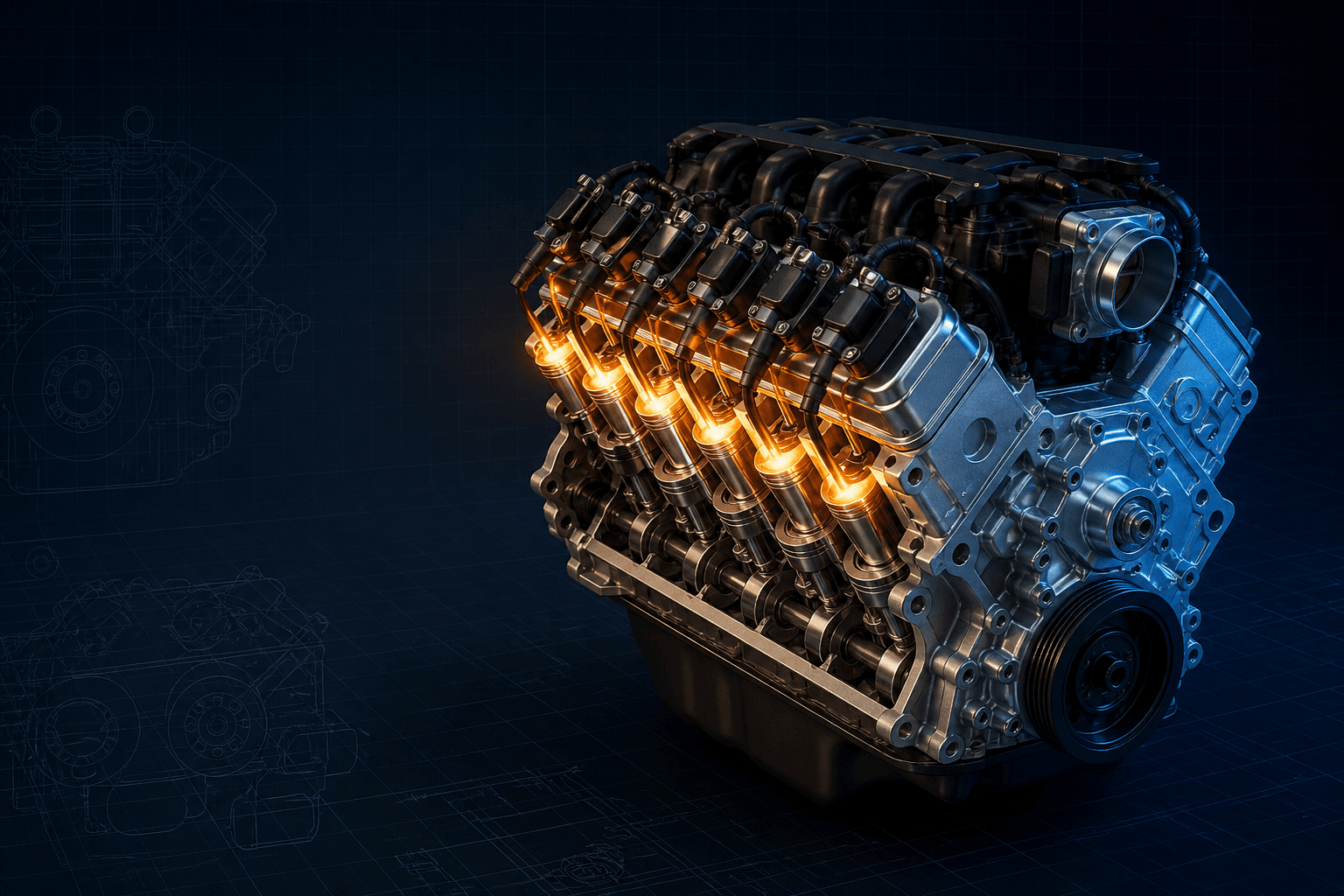
Interactive 6.0L HPOP system-flow diagram
Branded downloads includedPNG and PDF exports carry the TorqueSheet logo, torquesheet.com, source-page URL, and republishing attribution request. The PDF source link is clickable.
Follow the functional path. Component shape and connection location differ between early and later engines; the Ford workshop procedure controls physical service.
Ford 6.0 Powerstroke Hpop Diagram
| APPLICATION / ITEM | SPECIFICATION | NOTES |
|---|---|---|
| Pump supply | Filtered base-engine oil | Reservoir supply comes from the low-pressure system |
| Pressure control | IPR valve | PCM-commanded injection-pressure regulation |
| Pressure feedback | ICP sensor | Location changes with engine revision |
| Actuator | HEUI injector intensifier | High-pressure oil creates injection force |
| Ford sealed-system pump test | 3,000–4,000 psi | Ford GSB test condition with IPR full-fielded; not a normal idle specification |
The searched term “HPOO” is normally a typo for HPOP—high-pressure oil pump. Ford changed high-pressure-oil plumbing and ICP location during 6.0L production, so the flow path is stable as a concept while fittings, rails, standpipes, plugs, and diagnostic access points are build-specific.
How to use this specification correctly
- 01
Identify vehicle, engine serial/build date, and early-versus-late high-pressure hardware before selecting adapters or block-off tools.
- 02
Confirm correct engine-oil level, viscosity, filter installation, cranking speed, battery condition, and base-oil supply before condemning the HPOP.
- 03
Record ICP pressure, desired ICP, IPR duty cycle, FICM voltage, synchronization, and diagnostic codes during the exact Ford test condition.
- 04
If directed by Ford diagnostics, isolate the left and right oil-rail branches with the specified tools and compare pressure generation.
- 05
Remember that a block-off test can hide rail, injector, or under-valve-cover leaks outside the isolated portion; continue the prescribed leak checks.
How the HPOP circuit works
Filtered oil fills the high-pressure reservoir and feeds the mechanically driven HPOP. The IPR valve meters pump output to achieve the PCM's requested injection-control pressure. Pressurized oil travels through the distribution hardware to both cylinder-head oil rails, where it acts on each injector's intensifier piston.
The ICP sensor closes the control loop by reporting actual rail pressure. After an injection event, oil leaving the injector spill ports returns to the base-oil system. Ford's bulletin notes that observing abnormal spill flow can help identify internal injector faults during the specified test.
Early and late 6.0L differences
- ICP sensor location changes during production.
- Branch-tube, pump outlet, standpipe, dummy-plug, and rail sealing details are not universal.
- F-Series and E-Series access and component packaging differ.
- Use engine serial number and build date, not only the model-year registration.
What a low ICP reading does—and does not—prove
Low pressure proves that the PCM is not seeing the required pressure under the test condition; it does not by itself identify the pump. Supply loss, an IPR or electrical problem, pump wear, branch-tube leakage, standpipe or plug leakage, rail leakage, injector leakage, aerated oil, and insufficient cranking speed can overlap.
Ford's full-field pump test is a controlled diagnostic step. The 3,000–4,000 psi figure in the bulletin applies to the sealed test arrangement with the IPR commanded fully; it must not be presented as an idle target or used to justify improvised electrical powering.
Safety and test limits
- High-pressure oil can penetrate skin; never search for a live leak with a hand.
- Do not power the IPR outside Ford's stated time and connection limits.
- Use rated hoses, gauges, adapters, and eye protection.
- Disable injection and follow the workshop procedure before a cranking pressure test.
- Clean every opened connection; debris can damage the IPR, pump, rails, or injectors.
Ford 6.0L Power Stroke specifications can change by model year, engine, platform, wheel, and installed component. Confirm the VIN or engine identity, part numbers, fastener condition, and the current manufacturer instructions before service.
Ford 6.0 Power Stroke HPOP Diagram and Oil-Pressure Flow FAQs
What does HPOP mean on a 6.0 Power Stroke?+
High-pressure oil pump. It supplies the hydraulic pressure used by the HEUI injectors.
Does low ICP automatically mean the HPOP is bad?+
No. Ford's diagnostic process separates pump capability from IPR control, supply problems, branch/rail leaks, and injector-related losses.
Where does HPOP oil go after operating the injector?+
Oil discharged through the injector's spill/return path drains back into the base-engine oil system and crankcase.
Can I diagnose the high-pressure oil system from this diagram alone?+
No. It is an orientation and diagnostic-flow aid for the HPOP, reservoir and ICP circuit. Confirm test-port locations and pressure specifications in the VIN-, model-year- and build-date-specific Ford workshop procedure before opening the system.
Why does the build date matter when chasing a 6.0L high-pressure oil leak?+
The high-pressure oil hardware and sensor locations changed during production, so an early-engine leak point or test connection may not exist in the same form on a later engine. Identifying the build date first prevents testing at a port your engine does not have.
Technical sources
TorqueSheet favors engine- and component-specific manufacturer instructions over unsourced universal values.
1Ford 6.0L Diesel Crank/No-Start SupplementFord's diagnostic bulletin explains HPOP testing, IPR control, oil-rail isolation, injector spill returns, and sealed-system pressure expectations.↗2Ford 6.0L DIT engine-control descriptionFord describes the positive-displacement high-pressure pump, IPR-controlled rail pressure, ICP feedback, FICM, and hydraulically actuated injectors.↗3Motorcraft 6.0L Power Stroke injector technical sheetFord/Motorcraft confirms that high-pressure engine oil hydraulically actuates the 6.0L injector.↗