Chevy 454 Timing Marks: Cam/Crank Alignment, TDC and Ignition Timing
Chevy 454 timing-mark guide separating cam-to-crank dot alignment, balancer TDC, distributor indexing and application-specific ignition timing for production.
A traditional Chevrolet 454 big-block cam drive is assembled dot-to-dot: place the crankshaft-sprocket timing mark at 12 o'clock and the camshaft-sprocket mark at 6 o'clock so the marks face one another on the crank/cam centerline. That is cam-to-crank mechanical alignment, not the ignition-timing specification. The balancer line and front-cover tab are used to find crank degrees, while distributor position establishes rotor phase and initial timing. Initial advance varies by exact engine, vehicle and distributor; Chevrolet's current 454HO guide specifies 4° BTDC at 650 rpm only with the named HEI distributor and its stated vacuum-advance setup.
The phrase '454 timing mark' can mean three different marks. Inside the front cover, the cam and crank sprocket dots establish valve timing. Outside the cover, a line on the harmonic balancer passes a graduated pointer to show crankshaft degrees. Under the distributor cap, rotor position determines which cylinder receives spark. Treating those as one adjustment is a common reason a fresh big-block will not start.
Chevrolet's 454HO and ZZ454 guides also demonstrate why ignition timing cannot be copied from any 454 chart. Their 4-degree setting is tied to a named HEI distributor, idle speed and advance arrangement. GM's period 1970 material lists different values among production 454 calibrations. Use the engine suffix, vehicle emission label, distributor number or crate-engine instruction sheet.
This page provides a safe sequence from mechanical alignment through first start. It keeps the broad route indexable with an explicit application warning because a 1970 production LS5, later truck 454 and current 454HO crate engine require separate ignition-spec tables.
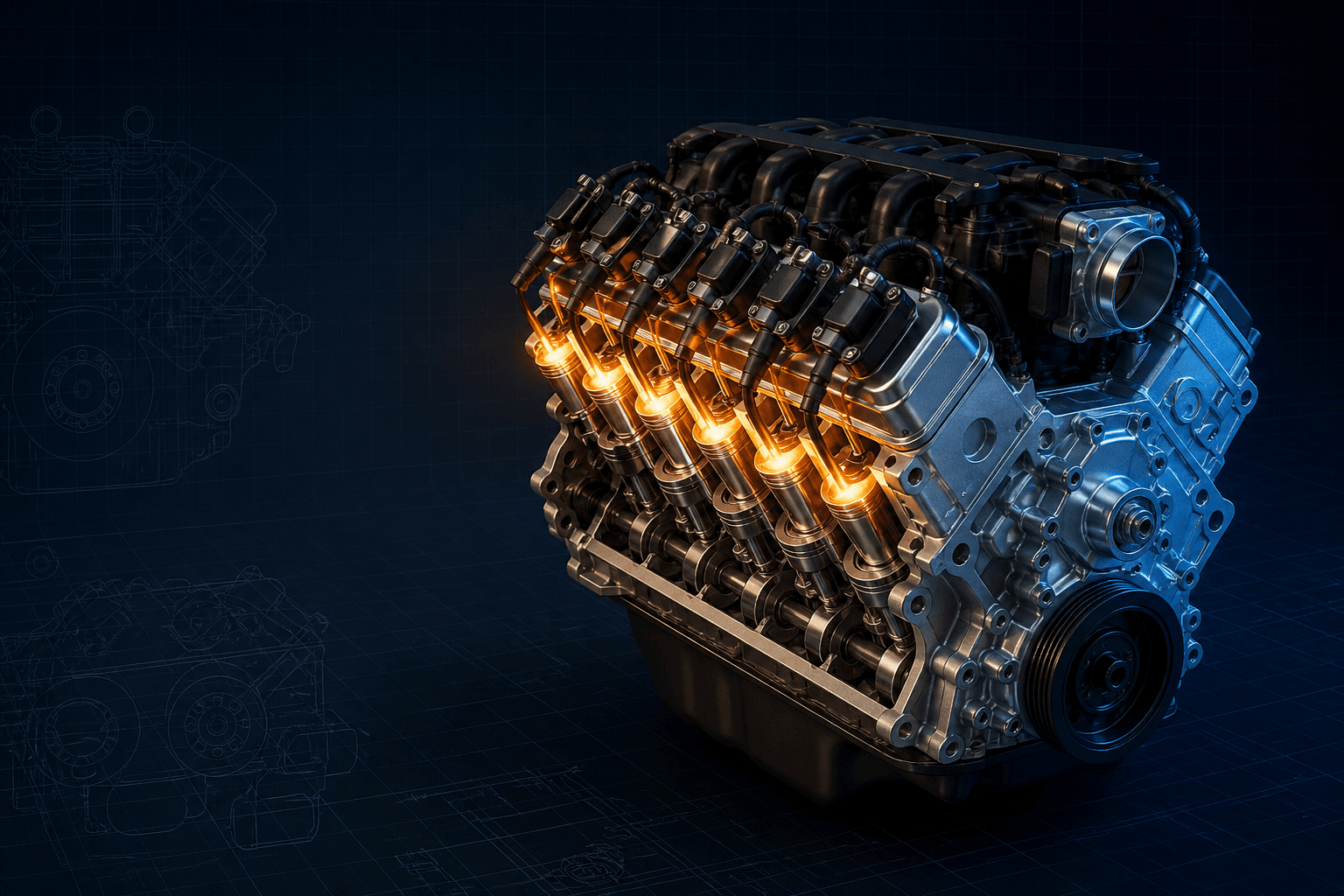
Interactive Chevrolet 454 timing-reference map
Branded downloads includedPNG and PDF exports carry the TorqueSheet logo, torquesheet.com, source-page URL, and republishing attribution request. The PDF source link is clickable.
Select the reference you are setting: sprocket dots, true TDC/balancer, or distributor/ignition timing. They describe related but different adjustments.
Chevy 454 Timing Mark Diagram
| APPLICATION / ITEM | SPECIFICATION | NOTES |
|---|---|---|
| Crank sprocket mark | 12 o'clock for dot-to-dot assembly | Faces cam-sprocket mark |
| Cam sprocket mark | 6 o'clock for dot-to-dot assembly | Cylinder 6 firing position |
| Cylinder 1 firing TDC | One crank revolution from dot-to-dot | Confirm both #1 valves closed |
| 454HO initial timing | 4° BTDC at 650 rpm | Only with Chevrolet-specified HEI/configuration |
| 454HO firing order | 1-8-4-3-6-5-7-2 | Distributor rotates clockwise |
Dot-to-dot places the crank at TDC with cylinder 6 on its compression/firing position and cylinder 1 at valve overlap. Rotate the crankshaft one complete revolution to put cylinder 1 at compression TDC before dropping the distributor. Balancer outer rings can slip and timing tabs can be mismatched to dampers, so prove true TDC mechanically when marks are suspect.
How to use this specification correctly
- 01
Identify block generation, engine suffix or crate part number, cam/timing-set type, balancer diameter and timing-tab position before assembly.
- 02
With the front cover removed, rotate the crank so the crank-sprocket dot is at 12 o'clock on the crank/cam centerline.
- 03
Install the cam sprocket and chain with the cam dot at 6 o'clock facing the crank dot. Keep the sprockets square and the chain evenly engaged.
- 04
Verify cam bolt type, locking method, fuel-pump eccentric if used and endplay using the exact timing-set/engine instructions; do not mix roller and flat-tappet hardware assumptions.
- 05
Rotate the crank clockwise by hand two complete revolutions and recheck the mechanical dot relationship. Stop on any hard interference.
- 06
For distributor installation, rotate the crank one additional full turn from the dot-to-dot position until the balancer indicates TDC and both cylinder-1 valves are closed.
- 07
Confirm true TDC if the balancer/tab combination is unknown. Mark the distributor housing where the cylinder-1 cap terminal sits and install the rotor to that reference while engaging the oil-pump drive.
- 08
Prime the oil system with the correct tool before initial start. Chevrolet instructs rotating the crank during priming so oil reaches the bearing system.
- 09
Start and set ignition timing with the procedure for the exact engine/distributor: specified idle, vacuum hose state, and any electronic bypass disconnected as directed.
- 10
Reconnect required vacuum or electronic controls, verify total advance at the specified rpm, check for detonation and confirm the timing mark is stable.
Cam and crank sprocket dots
The crankshaft turns twice for one camshaft revolution. Placing the crank dot up and cam dot down makes the two references easy to see and establishes the intended phase relationship. At that instant cylinder 6 is at firing TDC; cylinder 1 is also at top dead center but between exhaust and intake strokes.
Do not advance or retard the cam by moving a tooth to change ignition timing. Cam timing changes valve events. Ignition timing is adjusted at the distributor or controller after mechanical timing is correct.
Balancer line and timing tab
The harmonic balancer's engraved line represents a crank position only when its hub, outer inertia ring and front-cover pointer are a matched, undamaged set. Chevrolet notes differences in dampers and related hardware between current crate engines and older big-blocks.
If the rubber has allowed the outer ring to move, the line lies. If an aftermarket cover uses a pointer at a different clock position, an otherwise good damper can also show the wrong degree. Establish true TDC with a piston-stop or dial-indicator method appropriate to the assembled engine, then verify or remark the pointer.
Distributor installation at cylinder 1
After moving from dot-to-dot to cylinder-1 compression TDC, confirm both #1 rocker arms are on their base circles. The distributor gear's helical teeth turn the rotor as the distributor drops, so begin slightly before the target cap-terminal position.
If the distributor stops high, the oil-pump shaft slot has not engaged. Rotate the pump shaft with the proper priming/alignment tool or bump the crank only with full control; never clamp down the distributor to force engagement.
Ignition timing is application-specific
For the cited current 454HO with Chevrolet HEI P/N 19432312, Chevrolet specifies 4 degrees BTDC at 650 rpm with the vacuum-advance hose disconnected and plugged, and states 26 degrees total at 4000 rpm. The guide says the canister remains disconnected for that configuration.
That is not a blanket 454 value. The ZZ454 guide ties a similar setting to its own distributor, while production passenger-car and truck engines used calibration-specific timing, idle speed, vacuum routing and emission controls. Match the exact documentation before turning the distributor.
Troubleshooting a no-start after timing work
- Verify cylinder 1 is on compression, not overlap
- Confirm firing order 1-8-4-3-6-5-7-2 clockwise around a standard Chevrolet HEI
- Check rotor points to the actual #1 cap terminal
- Confirm crank/cam dots were aligned, not both pointed up during chain installation
- Prove balancer TDC if the outer ring or timing tab is questionable
- Verify distributor is fully seated in the oil-pump drive
- Check spark and fuel independently before repeatedly moving timing
- Stop cranking if backfire suggests crossed wires or incorrect phase
Chevrolet 454 Big-Block V8 specifications can change by model year, engine, platform, wheel, and installed component. Confirm the VIN or engine identity, part numbers, fastener condition, and the current manufacturer instructions before service.
Chevy 454 Timing Marks: Cam/Crank Alignment, TDC and Ignition Timing FAQs
Which way do Chevy 454 timing-chain marks point?+
For conventional dot-to-dot assembly, the crank mark points up at 12 o'clock and the cam mark points down at 6 o'clock so they face each other.
Is dot-to-dot cylinder 1 compression TDC on a 454?+
No. Dot-to-dot is cylinder 6 firing position. Rotate the crank one full revolution to reach cylinder 1 firing/compression TDC.
What is the ignition timing for a Chevy 454?+
It depends on the exact engine, vehicle and distributor. The cited current 454HO value is 4° BTDC at 650 rpm only for its specified HEI setup.
Why does my balancer show the wrong TDC?+
The outer ring may have slipped, the timing tab may not match the damper, or the engine may have mixed-generation parts. Verify true TDC mechanically.
Which direction does a Chevy 454 distributor rotate?+
A conventional Chevrolet big-block distributor rotates clockwise.
Can I move the timing chain one tooth to change ignition timing?+
No. That changes valve timing. Set ignition timing through the distributor or engine controller after the cam drive is correctly aligned.
Technical sources
TorqueSheet favors engine- and component-specific manufacturer instructions over unsourced universal values.
1Chevrolet Performance 454HO long-block specificationsChevrolet documents the current 454HO chain and sprocket part numbers, timing indicator, distributor procedure, firing order and its application-specific ignition timing.↗2Chevrolet Performance ZZ454/440 specificationsChevrolet identifies the ZZ454/440 timing set and gives ignition-timing instructions tied to its specified HEI distributor.↗3GM Heritage 1970 Chevrolet Chevelle vehicle-information kitGM's period specifications show that 454 ignition timing varied by engine calibration and vehicle application, so a modern crate-engine value is not universal.↗