1996 Chevy 350 Exhaust Manifold Bolt Torque
1996 Chevy 350 Exhaust Manifold Bolt Torque with fastener-group distinctions, installation cautions, application limits and official source lookup.
For the covered 1996 Chevrolet C1500 5.7L Vortec, tighten the two center exhaust-manifold bolts to 26 lb-ft (35 N·m) and the remaining manifold bolts to 20 lb-ft (27 N·m).
For the covered 1996 Chevrolet C1500 5.7L Vortec, tighten the two center exhaust-manifold bolts to 26 lb-ft (35 N·m) and the remaining manifold bolts to 20 lb-ft (27 N·m).
This split specification applies to the documented production 1996 VIN R truck 5.7L cast manifolds and iron Vortec heads. Earlier Gen I heads, different model years, tube headers, aluminum heads and aftermarket fasteners require their own values.
Identify the center pair before tightening and bring the casting down progressively from the middle toward the ends. Inspect the manifold for cracks and flange warpage and repair damaged threads; extra torque on the outer bolts will not compensate for a bowed flange or failed gasket.
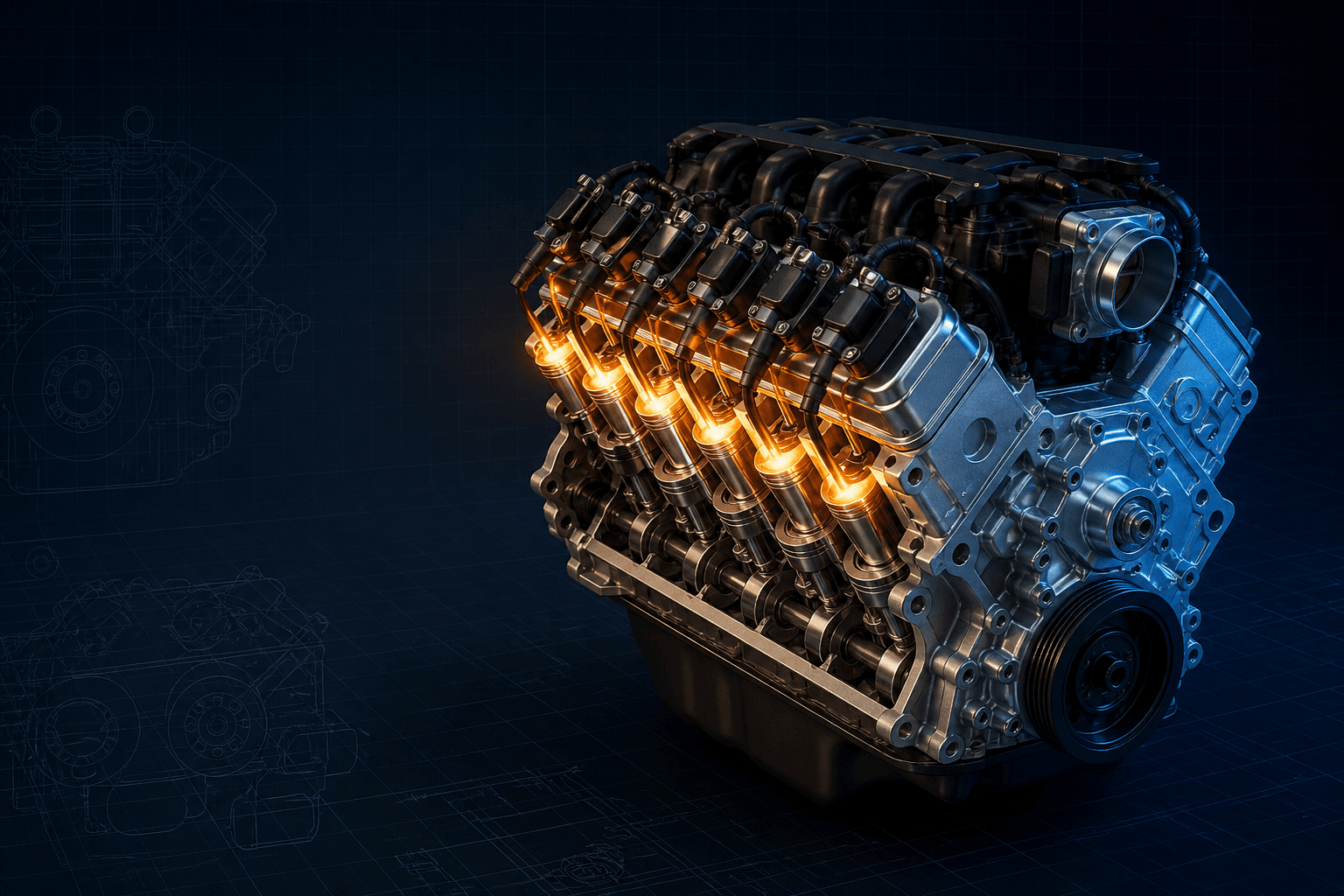
Interactive 1996 C1500 5.7L Vortec V8 fastener map
Branded downloads includedPNG and PDF exports carry the TorqueSheet logo, torquesheet.com, source-page URL, and republishing attribution request. The PDF source link is clickable.
Orientation aid only. Match every position and stage to the exact service diagram.
Chevy 350 Exhaust Manifold Torque Spec
| APPLICATION / ITEM | SPECIFICATION | NOTES |
|---|---|---|
| Two center manifold bolts | 26 lb-ft | 35 N·m; special center positions |
| All remaining manifold bolts | 20 lb-ft | 27 N·m |
| Tightening direction | Center outward | Seat the long casting progressively |
| Headers or aluminum heads | Component instructions | Do not transfer the truck cast-manifold chart |
Identify the center pair before tightening and bring the casting down progressively from the middle toward the ends. Inspect the manifold for cracks and flange warpage and repair damaged threads; extra torque on the outer bolts will not compensate for a bowed flange or failed gasket.
How to use this specification correctly
- 01
Identify the exact engine, component, fastener size and hardware instructions.
- 02
Clean and inspect threads and mating faces; apply only the specified lubricant or sealant.
- 03
Tighten in gradual balanced passes and verify any angle, cure-time or recheck instruction.
Why the center pair has a higher value
The 1996 Vortec truck chart assigns 26 lb-ft to the two center bolts and 20 lb-ft everywhere else. Mark those center positions before assembly; applying 26 lb-ft to every fastener erases a distinction Chevrolet made for the factory casting.
Start all bolts by hand and bring the manifold down progressively from the center toward both ends. A staged center-out approach seats the long flange without using an outer fastener to lever the casting into place.
Diagnose a tick before reaching for the wrench
Cold-start ticking commonly points to a cracked casting, failed gasket, loose or broken bolt, eroded port face or warped flange. Check flatness and thread condition because a wrench reading cannot prove the joint is geometrically sound.
This chart is specific to the 1996 truck's factory cast manifold and Vortec iron head. Tube headers, aluminum heads and different gasket/bolt kits follow their makers' torque and heat-cycle instructions.
Application boundaries for 1996 C1500 5.7L Vortec V8
This split specification applies to the documented production 1996 VIN R truck 5.7L cast manifolds and iron Vortec heads. Earlier Gen I heads, different model years, tube headers, aluminum heads and aftermarket fasteners require their own values.
Identify the center pair before tightening and bring the casting down progressively from the middle toward the ends. Inspect the manifold for cracks and flange warpage and repair damaged threads; extra torque on the outer bolts will not compensate for a bowed flange or failed gasket.
Chevrolet 1996 C1500 5.7L Vortec V8 specifications can change by model year, engine, platform, wheel, and installed component. Confirm the VIN or engine identity, part numbers, fastener condition, and the current manufacturer instructions before service.
1996 Chevy 350 Exhaust Manifold Bolt Torque FAQs
What is the 1996 Chevy 350 exhaust-manifold torque?+
The two center bolts use 26 lb-ft, while all remaining manifold bolts use 20 lb-ft.
Can every Chevy 350 manifold bolt be tightened to 26 lb-ft?+
No. The covered specification deliberately assigns the higher value only to the center pair.
Will more torque repair an exhaust tick?+
No. Inspect for cracks, flange distortion, gasket failure, broken hardware and damaged cylinder-head threads.
Do tube headers use the 20/26-lb-ft chart?+
Not automatically. Follow the header, gasket and cylinder-head instructions for that exact combination.
Technical sources
TorqueSheet favors engine- and component-specific manufacturer instructions over unsourced universal values.
1GM manuals and guidesOfficial GM model-year and VIN manual lookup.↗